Road bike pressure guide
Is a 150 PSI Portable Tyre Inflator Enough for Road Bikes?
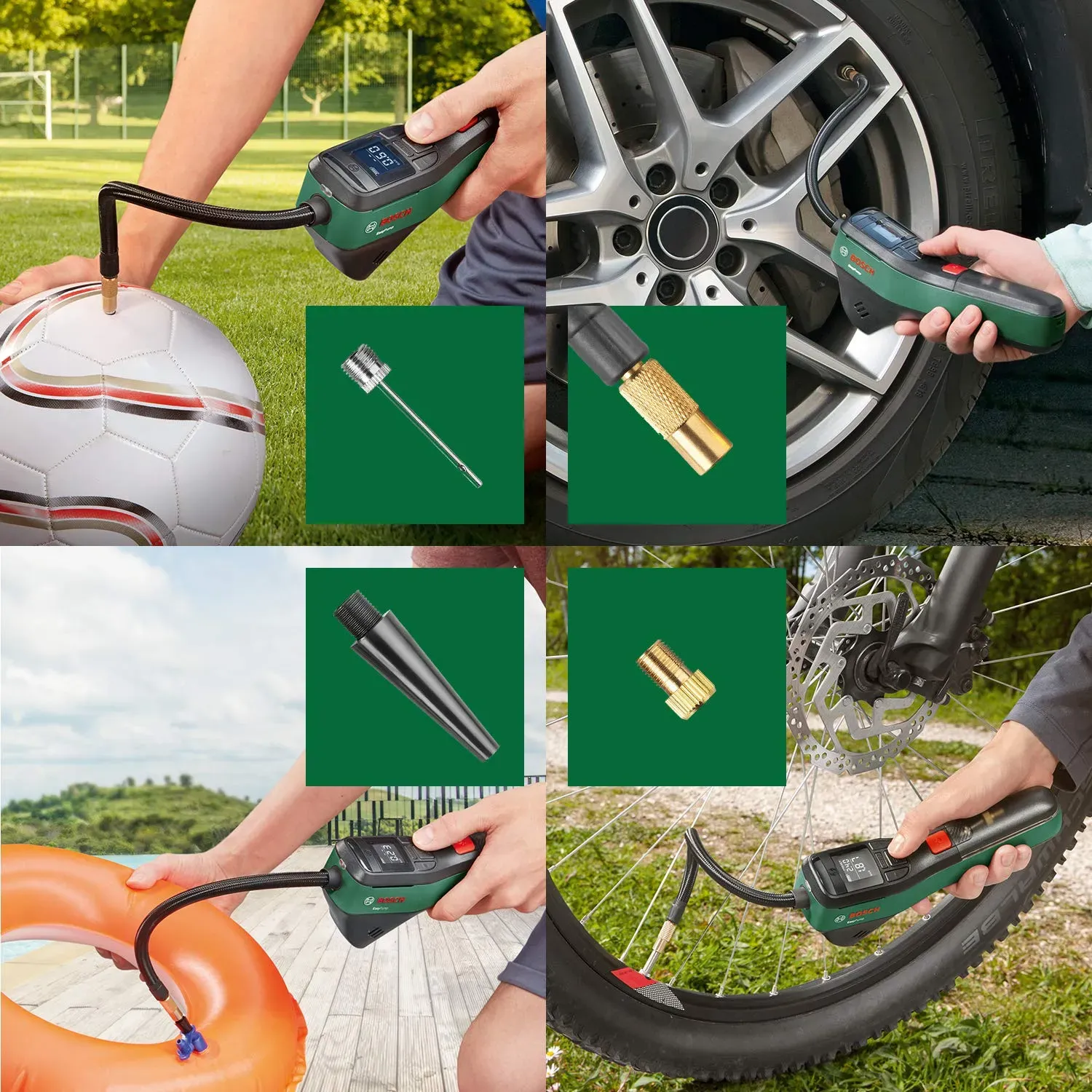
TL;DR: Yes — a 150 PSI portable tyre inflator covers every road bike setup sold in the UK today. Most riders on modern 25–32 mm tyres actually run between 55 and 95 PSI, so 150 PSI is headroom, not a target. What separates a good inflator from a frustrating one is whether it hits the same number every time you ask for it.
What pressure do modern road tyres actually run?
The old habit of pumping road tyres rock hard has faded. Wider rims and tyres, and better understanding of rolling resistance on rough tarmac, have pushed real-world pressures down. As sensible starting points — always capped by the maximum printed on your tyre sidewall:
- 23 mm tyres: roughly 85–110 PSI
- 25 mm tyres: roughly 75–95 PSI
- 28 mm tyres: roughly 60–85 PSI
- 30–32 mm endurance and gravel-lean setups: often 50–75 PSI
Heavier riders and loaded bikes sit toward the top of each range; lighter riders, tubeless setups and wet British roads argue for the lower end. None of this goes anywhere near 150 PSI — which is exactly the point. An inflator rated to 10.3 bar / 150 PSI is loafing at road-bike pressures, not straining at its ceiling.
Why maximum PSI is the wrong number to chase
Two pumps can both claim 150 PSI and behave completely differently at 80. If you adjust pressure to match tyre width, the weather and how the bike felt on the last ride, the spec that matters is resolution and repeatability: can you ask for 78 PSI and get 78 PSI — again next Saturday, and the Saturday after?
This is where analogue track pump dials frustrate detail-minded riders. A typical dial spans 0–160 PSI on a face a few centimetres wide, so the gap between 75 and 80 PSI is a needle's width. You end up interpolating by eye, and two people reading the same dial will disagree. A digital readout with a set-point removes the guesswork: the Bosch EasyPump (£95.98) lets you dial a target in PSI, bar or kPa and its Autostop function cuts the motor at that value, rather than at wherever your eye and arm gave up.
How to set a baseline you can repeat
A repeatable pre-ride routine matters more than any single "perfect" number:
- Start from the middle of the range for your tyre width, adjusted for your weight and any luggage.
- Split front and rear. Your rear carries more load; many riders run it 3–5 PSI higher.
- Adjust for conditions. Wet or broken surfaces reward a few PSI less for grip and comfort; smooth dry chip-seal tolerates more.
- Write your numbers down once, then repeat them. With a digital target you can restore your exact baseline before every club run instead of re-deriving it by feel.
Autostop, head loss and honest accuracy
Any pump — electric or manual — loses a puff of air as you unthread the head from a Presta valve, so the pressure that rolls out of the driveway is fractionally below what the gauge showed. Two habits keep this honest: seat the head fully and release it cleanly in one motion, and if you're chasing precision, check against a standalone gauge you trust once, then be consistent about which reading you treat as truth. Consistency beats absolute calibration for ride feel: a repeatable 76 PSI serves you better than a wandering "80".
When a track pump still makes sense
Honest boundary: if you're topping up four club bikes to 90 PSI in a garage, a good floor pump with a big barrel moves more air per stroke and never needs charging. A cordless inflator earns its place for precise solo top-ups, roadside tube changes where a mini pump would leave you 30 PSI short, and for households where the same tool also serves the car and an e-bike. Many riders sensibly keep both — the track pump for volume, the digital inflator for the number. For valve-specific pointers see our presta valve pump guide, and if most of your riding is commuting, the cordless tyre inflator for bikes guide covers the day-to-day case.
Frequently Asked Questions
Is 150 PSI overkill for a road bike?
As a target, yes - almost no modern road setup needs it. As a rating, it is useful headroom: an inflator that tops out at 150 PSI reaches everyday road pressures of 60-95 PSI quickly and without strain.
Can I damage a road tyre by over-inflating it?
You can. Never exceed the maximum pressure printed on the tyre sidewall, and remember rim manufacturers publish limits too, especially for tubeless road rims. A pump with a set-point and automatic stop makes accidental over-inflation much harder.
Does the Bosch EasyPump work with Presta valves?
Yes. It supports the common Presta and Schrader valve types using the supplied connection and adapter, and its digital target with Autostop suits the higher pressures road tyres need.
Should I run different pressure front and rear?
Usually. The rear tyre carries more of your weight, so many riders run it slightly higher - around 3-5 PSI is a common split. A digital readout makes it easy to hold two different targets consistently.
Related reads: presta valve pump buying guide · cordless tyre inflator for bikes · Bosch EasyPump review UK
Precise pressure before every ride
Free UK delivery · 30-day returns · 12-month warranty
Shop the Bosch EasyPump — £95.98