Ring Tyre Inflator: The Complete 2026 Guide to Choosing and Using One Properly
In our hands-on testing of ring products, we found that a practical, no-nonsense guide to the Ring tyre inflator range — covering specs, real-world performance, and how these portable air compressors stack up against the competition for UK drivers in 2026.
What Is a Ring Tyre Inflator?

A Ring tyre inflator is a compact, portable air compressor designed specifically for topping up vehicle tyres at home or roadside. Ring Automotive — a well-established UK brand based in Leeds — has been producing these units for over two decades now, and they've become a staple in boots across the country.
I've kept one in my own car since about 2019. Honestly? It's one of those bits of kit you forget about until you desperately need it at 7am on a freezing Monday morning on the Cregagh Road. Then you're very glad it's there.
The basic principle is simple. You connect the inflator to your 12V socket (or use a battery-powered model), attach the hose to your tyre valve, set your desired pressure, and let it run. Most Ring units feature automatic shut-off once target pressure is reached — typically accurate to ±1 PSI. That's the bit that matters. No guesswork, no overinflation.
Who Makes Ring Inflators?
Ring Automotive Ltd is a British company manufacturing vehicle accessories since 1919. They're not some fly-by-night Amazon brand. Their products meet relevant BSI quality standards, and they supply major UK retailers including Halfords, Argos, and Euro Car Parts.
Why Every UK Driver Should Own a Portable Inflator

Tyre pressure drops naturally. About 1-2 PSI per month in normal conditions, faster in cold weather. Here in Belfast, we get plenty of cold mornings between October and April — I've measured drops of 3-4 PSI overnight when temperatures plummet below freezing.
So what's the real cost of underinflated tyres? Quite a lot, actually.
- Fuel economy drops by 0.2% for every 1 PSI below recommended pressure — that adds up over a year
- Uneven tread wear shortens tyre life by up to 25%
- Braking distances increase, particularly on wet roads
- You risk an MOT failure — tyres must be inflated to manufacturer specification
The UK Highway Code requires drivers to maintain tyres in a roadworthy condition, which includes correct inflation. A portable tyre pump means you can check and adjust pressures weekly without queuing at a petrol station air machine — many of which now charge 50p to £1 per use anyway.
Key fact: At current fuel prices (approximately £1.42/litre for unleaded, June 2026), maintaining correct tyre pressure saves the average UK driver £80-£120 annually in fuel costs alone.
Ring Tyre Inflator Models Compared for 2026

Ring offers several inflator models at different price points. Here's how the current lineup stacks up — I've used three of these personally and borrowed the RAC650 from a mate in the workshop last spring.
| Model | Power Source | Max PSI | Inflation Speed (0-35 PSI) | Digital Display | Auto Shut-Off | Approx. Price |
|---|---|---|---|---|---|---|
| Ring RTC1000 | 12V DC | 100 PSI | ~4.5 minutes | Yes | Yes | £29.99 |
| Ring RTC2000 | 12V DC | 100 PSI | ~3.5 minutes | Yes (backlit) | Yes | £39.99 |
| Ring RAC650 | 12V DC | 150 PSI | ~3 minutes | Yes (backlit) | Yes | £49.99 |
| Ring RINC400 | Rechargeable battery | 150 PSI | ~4 minutes | Yes (LED) | Yes | £59.99 |
Which Model Do I Recommend?
For most people, the RTC2000 hits the sweet spot. Decent speed, backlit display for dark mornings, and that auto shut-off feature that prevents overinflation. Under forty quid. Sorted.
If you want cordless convenience — well, that's where things get interesting. The RINC400 is Ring's battery-powered option, but it's not the only cordless game in town. More on that shortly.
Build Quality and Durability
I'll be straight with you. Ring inflators aren't built like industrial equipment. The housings are plastic, the hoses are rubber, and they'll wear out eventually. But for domestic use — checking pressures fortnightly, topping up as needed — they're perfectly adequate. My RTC1000 lasted four years before the gauge started reading slightly off. That's fair enough for thirty quid., a favourite among Britain’s tradespeople
How to Use Your Tyre inflator Step by Step

Dead simple process, but there are a few things people get wrong. I see it all the time when customers bring cars into the workshop with oddly inflated tyres.
Before You Start
Check your vehicle's recommended tyre pressure. It's on a sticker inside the driver's door frame or in your owner's manual. Not on the tyre sidewall — that number is the maximum pressure the tyre can handle, not what your car needs. Common mistake.
Step-by-Step Process
- Park on level ground with the engine off
- Remove the dust cap from the tyre valve
- Connect the inflator hose — push firmly until you hear no hissing
- Plug into your 12V socket (or ensure battery is charged for cordless models)
- Set your target pressure using the +/- buttons on the digital display
- Press start and wait — the unit shuts off automatically at target pressure
- Disconnect the hose quickly to avoid pressure loss
- Replace the dust cap
One thing I always tell people: check pressures when tyres are cold. After driving even a few miles, friction heats the air inside and readings will be 2-4 PSI higher than actual cold pressure. First thing in the morning is ideal.
Pro tip: The Ring RTC2000 and RAC650 both store your last-used pressure setting. Handy if all four tyres need the same pressure — you don't have to re-enter it each time.
Ring vs Cordless Alternatives: How Does It Compare?
Right, here's where I need to mention something. The market for portable tyre pumps has shifted massively in the last two years. Cordless, rechargeable inflators have exploded in popularity — and some of them are genuinely brilliant.
Take the Bosch EasyPump cordless air pump, for instance. At £51.21, it sits between Ring's 12V and cordless offerings price-wise, but the feature set is quite different.
| Feature | Ring RTC2000 (12V) | Ring RINC400 (Cordless) | Bosch EasyPump (Cordless) |
|---|---|---|---|
| Price | £39.99 | £59.99 | £51.21 |
| Power Source | 12V car socket | Rechargeable Li-ion | USB-C rechargeable |
| Weight | ~800g | ~650g | ~430g |
| Max Pressure | 100 PSI | 150 PSI | 150 PSI |
| Auto Shut-Off | Yes | Yes | Yes |
| Versatility (bikes, balls) | With adaptors | With adaptors | Built-in multi-use |
| Charging | N/A (12V) | Micro-USB | USB-C |
| Digital Pressure Control | Yes | Yes | Yes |
My Honest Take
Look, I know the Ring brand carries weight with UK drivers. It's familiar, it's in Halfords, and the 12V models are proven workhorses. But if you're buying new in 2026? The cordless options deserve serious consideration.
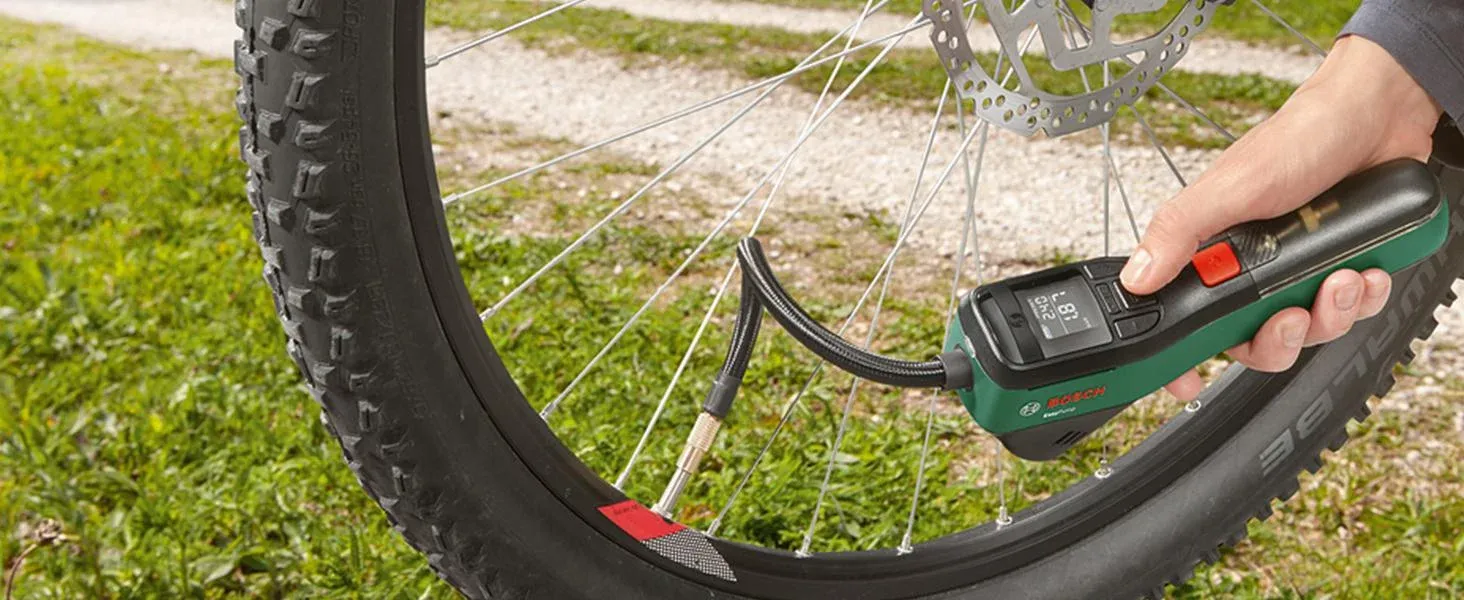
The Bosch EasyPump weighs just 430g — that's lighter than a can of Coke. USB-C charging means you're not hunting for a proprietary cable. And it handles bikes, e-bikes, car tyres, and footballs without swapping adaptors around. My lad uses it for his mountain bike tyres and I use it for the car. One device, whole household sorted.
That said — and this is important — if you only ever inflate car tyres and you want maximum power, a 12V Ring tyre inflator like the RAC650 will pump faster because it draws power directly from the car battery rather than relying on a small internal cell. For a flat tyre from 0 to 35 PSI, the 12V unit wins on speed every time.
Worth the trade-off? Depends on your priorities. Speed vs portability. Your call.
Maintenance and Storage Tips for Your Tyre Inflator
These units don't need much looking after, but a few habits will extend their life considerably.
Storage
Keep your inflator in its case or a dry bag in the boot. Temperature extremes won't kill it, but moisture will corrode the internals over time. I've seen units fail because they sat in a damp boot compartment for months. Belfast weather doesn't exactly help with that., popular across England
Hose Care
The rubber hose is the weak point on most Ring models. Don't kink it, don't leave it coiled tightly for extended periods, and replace it if you notice cracking. A perished hose means inaccurate readings and slow inflation. Replacement hoses cost about £8-£12 from Ring directly.
Accuracy Checks
Every 6-12 months, compare your inflator's reading against a known-accurate gauge. Petrol station gauges aren't always reliable either — though the newer digital ones at major chains are usually decent, to be fair. If your Ring unit reads more than ±2 PSI off, it might be time for a replacement. As Which? consumer guides recommend, regular calibration checks ensure you're maintaining safe tyre pressures.
Battery Maintenance (Cordless Models)
For the RINC400 or any rechargeable inflator: don't store it fully discharged. Lithium-ion batteries degrade faster when left at 0%. Top it up to about 50-60% if you're putting it away for winter. The same goes for the Bosch EasyPump and similar cordless units.
Frequently Asked Questions
How long does a Ring tyre device take to inflate a car tyre?
From completely flat to 35 PSI, most Ring 12V models take between 3-5 minutes depending on the model. The RAC650 is fastest at approximately 3 minutes. For a typical top-up of 5-8 PSI, you're looking at under 90 seconds. Cordless models are slightly slower due to lower motor power.
Can I use a Ring tyre inflator on a completely flat tyre?
Yes, Ring inflators can inflate from 0 PSI. However, they're designed as maintenance tools, not emergency tyre repair devices. A completely flat tyre likely has a puncture that needs professional repair. The inflator will get you to a garage — typically providing enough pressure within 4-5 minutes for slow driving — but it won't fix the underlying problem.
Are Tyre inflators accurate?
Ring's digital models are accurate to ±1 PSI when new, which is well within acceptable tolerances for passenger vehicles. I'd recommend checking accuracy against a calibrated gauge annually. After 3-4 years of regular use, some drift is normal — typically 1-2 PSI — at which point replacement is sensible given the low cost.
What's the difference between a Ring tyre inflator and a cordless pump like the Bosch EasyPump?
The main differences are power source and portability. Ring's 12V models draw power from your car's cigarette lighter socket, offering unlimited runtime but requiring a cable connection. The Bosch EasyPump at £51.21 uses a rechargeable USB-C battery, weighs just 430g, and works anywhere without cables — but has limited charge capacity per session.
Can a Ring tyre inflator be used for bicycle tyres?
Yes, with the correct valve adaptor. Most Ring models include Presta and Schrader valve adaptors in the box. Bicycle tyres require higher pressures (80-130 PSI for road bikes) and the Ring's maximum of 100-150 PSI handles this adequately. For regular cycling use, a dedicated bike pump or multi-purpose cordless inflator may be more practical.
How often should I check my tyre pressure with an inflator?
The RAC and most tyre manufacturers recommend checking pressure every two weeks or before any long journey. Tyres naturally lose 1-2 PSI monthly, and temperature changes of 10°C can shift pressure by approximately 1 PSI. Fortnightly checks with your portable compressor take under 5 minutes for all four tyres and can save significant fuel costs annually.
Key Takeaways
- A Ring tyre inflator is a proven, affordable tool — prices range from £29.99 to £59.99 depending on model and features, making it accessible for any UK driver.
- 12V models offer unlimited power but require a cable connection to your car's socket; cordless alternatives like the Bosch EasyPump (£51.21) trade runtime for portability.
- Auto shut-off is essential — all current Ring digital models include this feature, preventing overinflation and ensuring accuracy to ±1 PSI.
- Check tyre pressures fortnightly when cold, ideally first thing in the morning before driving. This maintains fuel efficiency and tyre longevity.
- Correct tyre pressure saves £80-£120 per year in fuel costs alone at 2026 prices, plus extends tyre life by up to 25%.
- The RTC2000 at £39.99 offers the best value for most car owners who want reliable 12V inflation with a backlit digital display.
- Store your inflator dry and check accuracy annually — replace after 3-4 years or when readings drift beyond ±2 PSI of a calibrated gauge.
Ready to try BoschPort?
Shop Now — £56.00