Can a USB-C Tyre Inflator Be Used for Car & Bikes?
Can a USB-C Tyre Inflator Be Used for Car & Bikes?
If you have ever been caught with a soft bike tyre before a ride or a low car tyre on a cold British morning, you will know the appeal of one compact tool that can handle both jobs. That is exactly why interest in the usb c rechargeable bike pump has grown so quickly in the UK. For commuters, motorists, e-bike owners and weekend cyclists alike, a cordless inflator promises less hassle, more precision and fewer trips to the petrol station air line.
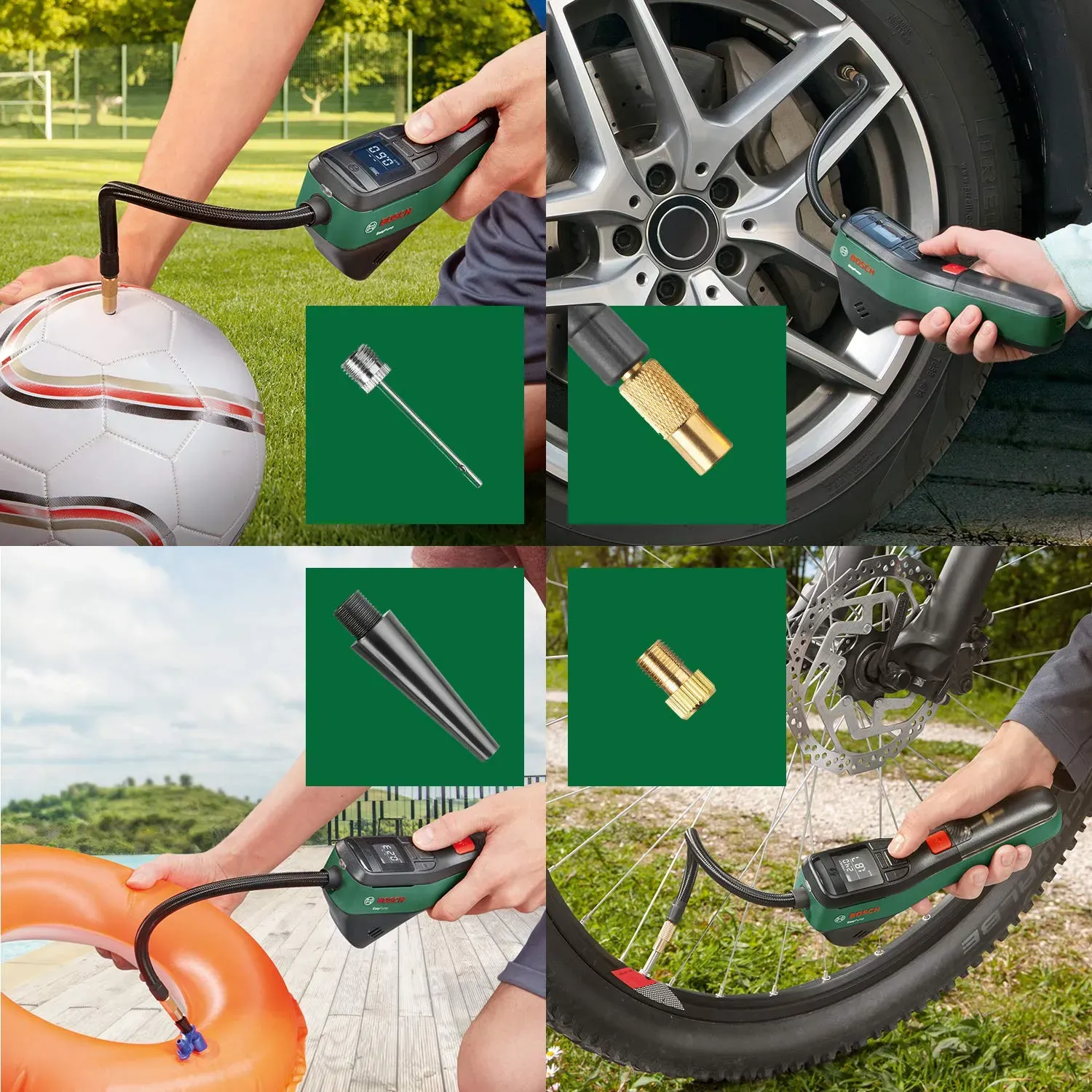
At BoschPort, we focus on practical inflation solutions because e bike inflation made easy, not another electric bicycle for sale sums up what many riders actually need. Rather than buying more kit than necessary, most people want one reliable inflator that works at home, on the road and in the garage. The Bosch EasyPump fits that brief well, offering fast, precise cordless inflation for bikes, e-bikes, cars and more.
So, can a USB-C tyre inflator be used for car and bike tyres? In many cases, yes — provided you understand the difference between tyre volume, pressure requirements, valve compatibility and battery capacity. This guide explains what a dual-purpose inflator can realistically do, where it excels and what to check before you buy.
Key Takeaways
- A quality usb c rechargeable bike pump can often inflate both car and bike tyres, provided it offers the right pressure range and suitable valve adapters.
- Bike tyres usually need higher pressure but lower air volume; car tyres need lower pressure but much more air volume.
- USB-C charging is especially useful in the UK because it matches the cables and power banks many households already carry.
- For mixed use, look for automatic shut-off, a clear digital gauge and support for Schrader and Presta valves.
- The Bosch EasyPump is a strong option for riders and drivers who want accurate cordless inflation without carrying multiple pumps.
The convenience of dual-purpose cordless tyre inflators
Traditionally, motorists and cyclists have used separate tools. A foot pump or track pump stayed in the shed for the bike, while the car relied on a garage compressor, a 12V inflator or a forecourt machine. That approach still works, but it is not always convenient. Modern households often own several vehicles: a family car, an e-bike, perhaps a road bike or a child’s bike as well. Storing and maintaining separate inflation tools quickly becomes inefficient.
A compact cordless inflator bridges that gap. It can top up a car tyre after a pressure warning, inflate an e-bike tyre before a commute, and handle occasional jobs such as prams, footballs or mobility equipment. This versatility matters because correct tyre press not just about convenience; it affects safety, efficiency and tyre life.
According to the RAC, underinflated tyres can increase fuel consumption and wear more quickly, while also affecting braking and handling. Meanwhile, for cyclists, correct presmproves comfort, grip and puncture resistance. If you want a broader overview of what to look for in a modern inflator, our Ultimate UK Guide to Cordless Tyre Inflators for Bikes explains the key features in more depth.
Can a USB-C tyre inflator be used for car and bike tyres?
In practical terms, yes — many portable cordless inflators are designed to do both. The important point is that “can be used” does not mean “equally ideal for every tyre type”. A mini inflator may be excellent for topping up car tyres and inflating bikes regularly, while a heavy-duty workshop compressor will still be better for repeated full inflations of large SUV tyres or van tyres.
What makes one inflator suitable for both?
- Sufficient maximum pressure: Many bikes, especially road bikes, need much higher PSI than car tyres.
- Enough airflow: Car tyres need more air volume, even though the PSI target is lower.
- Valve compatibility: Cars usually use Schrader valves; many bikes use Presta or Schrader.
- Battery capacity: A cordless unit needs enough charge for real-world use.
- Accurate gauge: Precision matters more than many people realise, particularly on e-bikes and road bikes.
The Bosch EasyPump is a good example of a product that naturally suits this mixed-use role. It is compact enough to keep handy yet precise enough for bike pressures, with the convenience of cordless operation. For users who do not want “another electric bicycle for sale” but do want easier maintenance, this is the sort of practical accessory that adds genuine day-to-day value.
Where the limits are
A mini air compressor for bicycle tyres can absolutely be used on a car in many circumstances, but expectations matter. If your car tyre is completely flat, inflation will take longer than topping it up from slightly below the recommended pressure. Equally, if you are inflating multiple large tyres in one session, battery runtime becomes more important.
For most UK households, the sweet spot is simple: one cordless inflator for maintenance, top-ups and emergency use across bikes and cars. That is where USB-C models stand out.
Volume vs pressure: how mini air compressors handle different tyre sizes
This is the part buyers most often overlook. The performance of a cordless inflator is not only about maximum PSI. It is also about air volume.
Bike tyres: higher pressure, lower volume
Many bicycle tyres need relatively little air by volume. Even so, they may require high pressure. A road bike may need 80 to 120 PSI depending on tyre width and rider preference, while hybrid and commuter bikes often sit lower. E-bikes vary by tyre type, but correct press especially important because of the extra weight of bike and rider combined.
If you ride an e-bike and want a more detailed pressure guide, see How to Inflate E-Bike Tyres at Home: PSI & Pump Guide. For riders asking whether a compact unit can handle narrower tyres, our guide on Is 150 PSI Enough for Road Bikes? is also worth reading.
Car tyres: lower pressure, much higher volume
Car tyres typically run at around 30 to 40 PSI, depending on the vehicle and load. That sounds easier than inflating a road bike tyre to 90 PSI, but a car tyre contains far more air. So the inflator needs more time and more battery energy to reach the target pressure.
That is why a compact inflator can feel impressively quick on a bicycle and merely “adequate” on a car. It is not necessarily underpowered; it is simply doing a bigger job.
Why this matters when choosing a usb c rechargeable bike pump
If you mainly ride bikes and only want occasional car top-ups, a compact cordless unit is usually ideal. If you expect to inflate four nearly-flat car tyres every week, you may be better served by a larger compressor. But for the majority of users, especially those doing regular maintenance rather than rescue-level inflation, a quality USB-C inflator offers the right balance of portability and capability.
Battery endurance: how many tyres can a cordless tyre inflator inflate on one charge?
This is one of the most common buyer questions: How many tyres can a cordless tyre inflator inflate on one charge? The honest answer is that it depends on tyre size, starting pressure, target pressure, ambient temperature and the efficiency of the inflator itself.
What affects battery runtime?
- Whether you are topping up or inflating from very low pressure
- The size of the tyre
- The target PSI
- Outside temperature, which can affect lithium battery performance
- How long the motor runs continuously
As a rule of thumb, a cordless inflator will manage significantly more bicycle top-ups than car tyre top-ups per charge because bike tyres require far less air volume. For example, several bike tyres can often be inflated or topped up on one charge, while the same battery might only handle a handful of car tyre top-ups depending on how low they are to begin with.
That is why product positioning matters. A portable inflator such as the Bosch EasyPump is best seen as a versatile maintenance tool rather than a replacement for a high-capacity workshop compressor. In real ownership terms, that is often exactly what UK users need: enough battery for day-to-day reliability, plus USB-C charging for easy top-ups between uses.
Why top-ups are the real everyday use case
Most drivers and cyclists do not regularly inflate tyres from completely flat. They are usually correcting a small pressure drop. In that context, a cordless inflator performs very well. Keeping tyres at the right pressure little and often is more efficient than waiting until they become noticeably soft.
The UK Highway Code places responsibility on drivers to ensure vehicles are roadworthy, and tyre condition is part of that. Likewise, regular pressure checks help cyclists reduce puncture risk and improve handling. In both cases, having a convenient inflator close to hand means the job actually gets done.
Why USB-C charging is a game-changer for UK motorists and cyclists
USB-C may seem like a small detail, but it makes a genuine difference in daily use. Older inflators often relied on proprietary chargers, 12V sockets or awkward cables that were easy to lose. USB-C is simpler, more universal and far easier to live with.
Practical advantages of USB-C
- One cable for multiple devices: Many UK households already use USB-C for phones, tablets and power banks.
- Easier travel and commuting: You can recharge from a car adapter, laptop, mains plug or portable battery.
- Less clutter: No need to keep a separate charger just for the pump.
- Better long-term convenience: Replacement cables are widely available from major UK retailers.
For cyclists, especially e-bike riders, this is particularly useful. If you already carry charging kit for lights, GPS units or your phone, a USB-C inflator fits neatly into the same ecosystem. For drivers, it means the inflator can be topped up at home or in the car without hunting for a specialist lead.
This convenience is one reason the usb c rechargeable bike pump has become such a strong commercial category. It does not just promise inflation; it removes friction from ownership. If you want to compare broader buying criteria, our Ultimate UK Guide to Cordless Tyre Inflators for Bikes covers charging, portability and accuracy in more detail.
Switching between Schrader (cars) and Presta (bikes) seamlessly
A dual-purpose inflator is only truly convenient if it works smoothly with the valves you actually use. In the UK, most car tyres use Schrader valves. Many bicycles also use Schrader, especially hybrids, mountain bikes and children’s bikes. However, road bikes and many performance bikes commonly use Presta valves.
Why valve support matters
If your inflator only works neatly with Schrader, it may still inflate a Presta tyre with an adapter, but the experience can be fiddly. The best setup is an inflator supplied with the right adapters and straightforward storage for them, so you are not searching through a drawer when you are already late for work.
What to look for
- A clear, included Presta adapter
- Simple connection and removal without excessive air loss
- Accurate pressure reading after attaching the hose
- Automatic shut-off at the selected pressure
For mixed households, this flexibility is invaluable. One person may need to top up a hatchback tyre to manufacturer spec, while another wants precise inflation for an e-bike or commuter bike. A cordless inflator that moves easily between Schrader and Presta valves saves time and avoids the need for separate pumps.
If you want a more product-specific view, our Bosch EasyPump Review UK: Best Portable Bike Pump? looks at how the unit performs in real use and why it has become popular with riders who value simplicity.
Real-world UK context: why accurate tyre pressure matters
British roads, weather and commuting habits all make tyre maintenance more important than many people think. Potholes, kerbs, temperature swings and heavier e-bikes can all affect pressure over time. A tyre that feels “about right” by hand may still be significantly underinflated.
That matters for comfort and safety. For drivers, lower pressure can affect stopping distances, wear patterns and fuel economy. For cyclists, it can increase rolling resistance and puncture risk. It can also make an e-bike feel sluggish, especially on urban stop-start routes.
Public sector guidance in the UK consistently emphasises basic roadworthiness, and organisations such as the NHS also promote cycling as part of a healthy, active lifestyle. Whether you commute by bike for fitness or rely on a car for family travel, keeping tyres correctly inflated is one of the simplest maintenance tasks with the biggest practical payoff.
One gadget for the garage and the road
So, can a USB-C tyre inflator be used for car and bike tyres? For most people, yes — and very effectively. The key is choosing a model that balances pressure capability, airflow, battery life and valve compatibility. A compact cordless inflator will not replace every workshop compressor, but it can absolutely replace the clutter of separate pumps for many households.
If your goal is simple, accurate inflation without the inconvenience of garage air lines or manual pumping, a USB-C model is a smart choice. It is especially well suited to modern UK users who want one practical tool for the car, commuter bike, e-bike and family essentials.
BoschPort exists for exactly this sort of need: e bike inflation made easy, not another electric bicycle for sale. The Bosch EasyPump gives fast, precise cordless inflation for bikes, e-bikes, cars and more — making it a sensible addition to your garage, boot or cycling kit.
Ready to make tyre inflation easier?
If you want a compact, accurate and genuinely useful solution for everyday tyre maintenance, the Bosch EasyPump is well worth a look.
Shop the Bosch EasyPump at BoschPort
For more buying advice, you can also read our Ultimate UK Guide to Cordless Tyre Inflators for Bikes.
Frequently Asked Questions
Can a USB-C tyre inflator be used for car and bike tyres?
Yes, many can. The main requirements are enough pressure for bike tyres, enough airflow for car tyre top-ups, and the correct adapters for Schrader and Presta valves. A compact cordless unit is ideal for maintenance and emergency use across both.
How many tyres can a cordless tyre inflator inflate on one charge?
It depends on tyre size and starting presn general, a cordless inflator will manage more bicycle inflations than car tyre top-ups because bike tyres need much less air volume. Topping up partially inflated tyres uses far less battery than inflating from flat.
Is a mini air compressor for bicycle tyres powerful enough for a car?
For occasional top-ups, usually yes. For repeatedly inflating large car tyres from very low prest may be slower than a larger compressor. For most households, though, a compact inflator is more than adequate for everyday use.
Why is USB-C better on a rechargeable bike pump?
USB-C is easier to live with because it uses the same charging standard as many modern devices. That means simpler charging at home, in the car or from a power bank, with less reliance on proprietary leads.
Ready to try BoschPort?
Shop Now — £51.21